Member Success Stories
Making a difference with Oracle Academy
Membership
Share this story
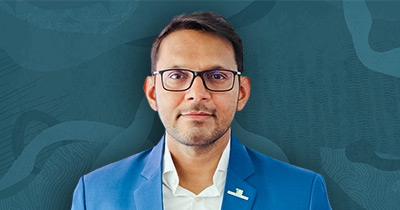
Babji Neelam
The spotlight is on Babji Neelam, CEO, Technical Hub, Aditya University, India.
Aditya University is a state university located in the village of Surampalem, close to the Bay of Bengal, in a rural district of India’s Andhra Pradesh state. The university, with 28,000 students and 1,000 faculty members, is part of the Aditya Educational Institutions, whose 70-plus schools and colleges provide learning for a further 35,000 learners.
The School of Engineering has 13 departments, including Computer Science & Engineering (CSE), founded in 2001 to offer undergraduate and graduate courses to 10,000 students. The department has agreements with numerous companies and training institutes to ensure student placements and work opportunities.
Technical Hub was initiated by Aditya University as its training and skills development arm. Its core function is to identify the training and professional certification pathways that will equip graduates with career-relevant skills. Oracle Academy is among the industry collaborators selected by Technical Hub to advance this objective.
Babji Neelam established Technical Hub 10 years ago as a bridge between industry talent requirements and the university syllabus. The unit assesses the offerings of software suppliers and training organizations and selects those that most benefit both students and teachers.
Neelam earned his master’s degree in Computer Engineering from Aditya University in 2002 before working in Australian banks as a Java developer for four years, and then at banks in Switzerland for a further four years. Following that, he joined one of India’s largest IT consultancies, and worked as project manager for nine years. Then in 2015, he returned to his home state of Andhra Pradesh in order to start up Technical Hub. He entered into partnership with Aditya University the following year.
Oracle Academy: How did the Technical Hub come about?
Babji Neelam: What I felt after eight years working abroad and nine years in India as a project manager, was an urge to return to my roots, to the Aditya region that I’m from, a rural state where the students are sons and daughters of taxi drivers, mechanics, and farmers. I wanted to contribute something to the next generation but also create my own branding, to be my own boss. The idea was to bridge the gap between industry and academia, a very popular topic for decades, yet it seemed to me there was much talk and little action. What industry demands is not rigid textbook learning but relevant technology expertise, the skill to communicate across disciplines, the ability to lead team-centered projects, problem formulation, and hands-on experience. So, I decided to fill that gap with my own approach. I returned to my alma mater, Aditya University, and talked it over with the academic dean, who invited me to embed Technical Hub inside the campus.
Oracle Academy: And are you bridging the gap?
Babji Neelam: My role is to find the most appropriate computer science courses, to get the instructors trained and certified on those technologies, and to then spread the teaching across the thousands of students enrolled in Computer Science & Engineering and associated disciplines. I am a member of the Board of Studies, and the Centre for Teaching and Learning, which is responsible for faculty professional development.
At the same time, in terms of bridging industry and academics, Aditya University has agreements with over 260 employers in the state and nationwide. One of my tasks is to identify their requirements and align the university syllabus to those needs. In parallel, Aditya has signed Memorandums of Understanding with many suppliers of software and training, which itself is an exemplary bridge between industry and academia. The Board of Studies, of which I am a member, meets every three months to assess the integration of new offerings into the syllabus.
Oracle Academy: Which curriculum and resources are you using from Oracle Academy?
Babji Neelam: We are using both the Java curriculum and database curriculum, mapped to the university’s syllabus in Java and relational database management. Oracle Academy’s courses, designed by Oracle experts to industry standards, are taught to each and every class; thus, the students are exposed to the same tools that are used in industry worldwide. We have also adopted the Oracle Academy Cloud program to bolster our cloud computing courses. The courses are taught by approximately 35 instructors, all of which have been trained in the Oracle Academy teaching methodology. All of these faculty members have also become certified themselves in the relevant Oracle technologies.
Another resource we are using is Oracle APEX, which I introduced after attending an Oracle India APEX event in Bangalore a few years back. As a result, many faculty skilled up in the dedicated Oracle Academy course and became APEX certified. They then started spreading awareness on the campus of the benefits of low code and no code development.
Oracle Academy: Is Oracle professional certification encouraged?
Babji Neelam: Very much so! We make sure to choose certification-aligned programs in collaboration with industry-leading vendors. That way our learners benefit from hands-on learning experiences and ensure that they remain at the forefront of the ever-evolving technological landscape. To that end we have made Oracle Certified Associate exams mandatory for teachers of Java and database, which leads to better course delivery and learning outcomes. OCA certification has become part of the university’s professional development program. Certification is a real plus for students and teachers. It reflects on the university branding and ranking when students find jobs thanks to what they have learned here.
As an Oracle Academy member institution, we are able to bulk purchase bundles of one or two thousand individual exam entry vouchers from Oracle University. These we redistribute to students at cost. They sit the Oracle certification exams via the Pearson VUE professional exam delivery platform. Many students thus become certified, and we track their careers and herald them when they land jobs with multinationals, as well as local industries.
Last year six students, following the example of their teachers, became certified on Oracle APEX. When one of our industry partners, an APEX user, heard about this, they offered student placements and, after the six-month internship period, hired all six of them as full-time employees.
Certification increases student work opportunities, boosts their careers, and as mentioned, enhances the university’s branding. At the same time, it reflects well on myself and Technical Hub!
Incidentally Technical Hub has built a platform for the university where we upload students’ learning progress, their final exam results, and information on the companies that hire them, and we give these recent graduates a way to contact us if they find internship or job opportunities for current students.
Oracle Academy: Brilliant. Now kindly tell us how the faculty is using Oracle Cloud?
Babji Neelam: All final year students are tasked with creating an application. Even though we introduce them to other clouds, we have made it mandatory to deploy their apps to Oracle Cloud Infrastructure. Therefore, students are all issued Oracle Cloud Free Tier accounts. They get to work with the Oracle Autonomous Database, its new AI versions, and other cloud services to enhance their knowledge of OCI. They learn elastic scaling, load balancing, leveling up, instant creation of virtual machine instances, deployment of websites, and a host of other skills.
They build their apps with APEX and host them in Oracle Cloud.
Oracle Academy: Do you also make use of the Oracle Academy Member Hub?
Babji Neelam: Absolutely. Once again this contributes to faculty development. Teachers are expected to top up their knowledge of Oracle technologies through the Oracle Academy Education Bytes and Oracle Academy Workshops and webinars available through the Member Hub. In that way they get to interact with Oracle experts, absorbing knowledge beyond the boundaries of the coursework. After absorbing these resources, faculty points students to the Hub to follow the same Bytes and Workshops in a Box, such as Solve It with SQL or Embedding Generative AI in an APEX Application.
We promote faculty development by requesting specific webinars from Oracle experts every few months. They help teachers learn how to apply and effectively deliver concepts to the students, such as deployment of apps to Oracle Cloud, or APEX for transforming application development. Afterwards, they get their students to connect to the same 60- or 90-minute webinars. As many as 7,000 students attend them.
Oracle Academy: That sounds like effective collaboration…
Babji Neelam: Oracle Academy collaborates fantastically well. It provides wonderful content and software to educational institutions. I am especially glad that it gives equal weight to all colleges—tier one colleges or tier three such as us in this rural setting. For Oracle Academy there is no differentiation.
This goes as far as staging joint webinars. Last December Oracle Academy joined forces with Aditya University to deliver an online session on AI services on Oracle Cloud. It targeted educators and their students from other colleges, spreading the word on Oracle’s Autonomous AI Database. It was attended by 3,600 participants.
Oracle Academy: Thank you for sharing. And otherwise, what interests do you have outside of the university and the Technical Hub?
Babji Neelam: First of all, I am passionate about martial arts. I am a karate black belt. I dedicated 10 years of school life to that activity, won many cups and championships at state and national level. My son is learning martial arts in my footsteps. I also play cricket on the university team whenever I have the chance, fast bowling being my specialty.
Cars interest me too. When I worked in Switzerland, I would visit the Geneva Car Show every year and even bought myself a BMW during that time—then bought another one a few years ago here in India.
And then there is mentoring. As I said at the beginning, I wanted to give something back to the community I grew up in. At Aditya and outside I do a fair amount of one-on-one mentoring, helping young people build a roadmap for their studies and future careers, conducting mock interviews, sharing my experience of becoming a small entrepreneur through Technical Hub and giving advice.
Oracle Academy: It’s been 10 years as we speak since you started Technical Hub…
Babji Neelam: It was the riskiest step in my life to leave secure IT jobs and launch myself solo. When I chose this path, many criticized, few believed, but almost no one could see what I saw. Like the penguin that walks away from the crowd not because it’s lost, but because it knows its direction, I kept moving forward.
Today, when I look back at this 10-year journey, I don’t just see success, I see experience, learning, and growth in the entrepreneurial world that no classroom can teach. If you believe deeply and stay consistent, your journey will speak for itself.
Thank you, Babji Neelam, for your passion for Oracle Academy and for preparing your students to make a positive impact.