Member Success Stories
Making a difference with Oracle Academy
Membership
Share this story
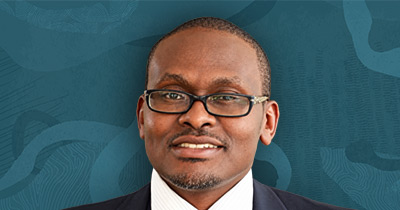
Nicodemus Maingi
The spotlight is on Nicodemus Maingi, Strathmore University, Kenya.
Strathmore University, in Nairobi, Kenya, began in 1961 as Strathmore College, an advanced-level sixth form college offering Science and Arts subjects by a group of professionals who formed a charitable educational trust (now the Strathmore Educational Trust). In 2002 the college was granted university status. Today, it has a total student body of over 8,000, comprising both part-time and full-time learners, with over 11 percent being international students.
Strathmore has seven institutes and schools, of which the School of Computing and Engineering Sciences (SCES) is the dedicated entity tasked with developing highly skilled professionals who drive innovation in technology and engineering.
Dr. Nicodemus Maingi is a SCES faculty member who lectures various units across the bachelor of Business Information Technology and Computer Science undergraduate programs, which prepare students for the world of work in fields such as software engineering, database administration, business intelligence, and data analytics, as well as networking.
Dr. Maingi has been lecturing, mentoring and doing research at Strathmore University for over 25 years. In 2010 he founded the HP-Strathmore Research Laboratory (HP-Lab), which focuses on novelty research and development work, catalyzing the development of various local and home-grown solutions for various industries across the African region.
He holds a bachelor’s degree from Egerton University, Njoro, Kenya; a master’s degree in Information Systems from the University of Nairobi; and a PhD from Strathmore University, focusing on Disease Modeling and Epidemiology.
Dr. Maingi has used Oracle databases and tools throughout his career and is the Oracle Academy Catalyst at Strathmore University.
Oracle Academy: Can you tell us about your journey with Oracle databases and Oracle Academy?
Nicodemus Maingi: I am using the same constantly evolving, Oracle database teaching tools today as almost 25 years ago, and there’s no reason to change. In the past five years I have added Oracle Cloud Infrastructure (OCI), Oracle AI and Oracle APEX, but essentially, my students learn how to apply IT to business the same way as those alumni who graduated in the early years of this century and are now employed in the public or private sector in Kenya. In a nutshell, Oracle Academy has been and is one of Strathmore University’s tools for seamless classroom learning delivery.
Oracle Academy: Impressive! Can you walk us through that journey?
Nicodemus Maingi: Upon joining Strathmore University in 2001, I was among the pioneer faculty who helped establish the Faculty of Information Technology, now the School of Computing and Engineering Sciences. We initially used Microsoft Access, which was useful for beginners but limited for more advanced data analytics. I therefore explored IBM Db2, Microsoft SQL Server, and Oracle Database. Oracle stood out because faculty and students could download the tools free of charge and use them for teaching and hands-on labs.
A few years later, Strathmore joined Oracle Academy and I became the local Oracle Catalyst, supporting the training and onboarding of students and faculty.
Over the years, we have used Oracle Database versions from 8i through to 26ai, alongside Oracle Academy learning pathways including Database Foundations, Applied Database Systems, Database Design, Database Programming with SQL and Database Programming with PL/SQL, Application Development Foundations, and the Solve It with SQL workshop.
When COVID-19 forced teaching online, Oracle Live SQL, now Oracle FreeSQL, enabled students across East Africa to continue classes and hands-on lab work remotely. Today, we also use Oracle Database 26ai, AI and machine learning, Java, Oracle APEX, and Oracle Cloud Infrastructure to deliver practical, current learning experiences.
Oracle Academy: Thank you, quite a ride…
Nicodemus Maingi: This whole evolution, from Live SQL to OCI and APEX on the Autonomous Database, the Oracle Ecosystems has been a real game changer for our students, giving us the means to run the vital hands-on labs that complement the theoretical aspects covered in classroom lectures. I believe Oracle Cloud- driven labs enable our students to learn better, to research, and gain crucial hands-on experience. And for the faculty, there’s no longer a need to upgrade physical machines on which to install or configure database software. Everything runs seamlessly from the cloud; it's just easy, plug and play.
Oracle Academy: What kind of exercises do you give students?
Nicodemus Maingi: Oracle Academy has great case studies with sample data, but we also connect with industry partners here in Kenya to develop real-world, localized scenarios and case studies. Several organizations usually share data, redacted to mask sensitive, personally identifiable information. Some examples include some savings and credit cooperative unions, and business entities we have worked with in the past; we use some of these datasets to simulate the real world of work and business out there, which greatly helps prepare students to hit the ground running once they complete university and get to work in various industries.
Students have been able to identify business needs, define entities and attributes, carry out discovery, and build great models and designs. Many other case studies exist: from ecommerce systems, finance and investment banking, to name but a few.
Oracle Academy: Do you introduce students to other vendor software?
Nicodemus Maingi: Yes, for comparison purposes. We give students the analogy of learning how to drive a car, say a Ford. Once they have learnt how to “drive” a Ford (read Oracle), and then they go out into the industry and encounter other car models, say BMWs, Volvos, Toyotas, etc., they must be versatile enough to adapt and relearn. The other car models are synonymous to other vendor software tools. With Oracle they learn everything there is to know about relational database management systems, data analytics and business intelligence, yet there are nuances in the other relational database management systems (RDBMs). By showing them how things like relational algebra operations, joins operations, aggregate functions, and groupings operations, they are able to easily relate with how all these operations are undertaken in other RDBMS such as Postgres, MySQL or MS SQL Server. As long as they have learnt to work with one RDBMS, we believe they will never miss out on a job opportunity for lacking skills and knowledge of a vendor’s database tools. We get them to work in groups, take notes and present the nuances for comparative experiences. When they go out into the world of work, they are ready to be flexible, to adapt to the fast-changing world of technology.
Oracle Academy: Excellent. Do you also encourage certification?
Nicodemus Maingi: Exposure to opportunities for professional certification raises the bar as they prepare to graduate and hit the job market with their feet firmly on the ground.
Professional certification presents a path for students to validate their skills: possessing a theoretical understanding is a good start but it is never enough; certification exams prove that one can implement solutions and undertake hands-on activities. We would like a good number of our students to participate and hopefully ace some of this year’s certification exams as a means to lift their professional standing and experience. Most job seekers have an undergraduate degree (of some kind), but companies are looking for that little extra something which could tip the balance. Oracle certification adds a feather on the hat.
Last year (2025), with very constrained timetables to help students prepare for their final exams, I challenged myself in the 2025 Race for Certification and I got certified in three professional tracks: Oracle AI Vector Search, OCI Generative AI, and OCI AI Foundations.
Oracle Academy: How many other faculty use Oracle Academy resources?
Nicodemus Maingi: Several colleagues in my school (the School of Computing and Engineering Sciences) use the Oracle database and Java resources. I am currently promoting Oracle NetSuite to the Business School, and Oracle Primavera to the engineering disciplines. I have taken training in both of these applications, which are widely-used tools in the industry. Oracle Academy has an amazingly rich and relevant set of solutions.
Oracle Academy: How would you state the overall benefits?
Nicodemus Maingi: For students, Oracle Academy bridges the gap between theory and the use of database management systems in the workplace. They get the theoretical fundamentals in classroom lectures, but the labs bring the theoretical concepts to life. There is also great scope for self-learning. For example, students can download their queries in Excel CSV file formats for reanalysis of their results, enabling them to go deeper. Another thing to mention is that with an Oracle Cloud account, every student can upload their projects into GitHub and collaboratively show prospective employers examples of what they have done — including the code — which is an excellent selling point.
For us at Strathmore, it helps us to go deeper in our teaching and classroom delivery. When one is in the classroom, there is always the concern: How do I break down the theory in a practical way for students to understand? With Oracle Academy, there are powerful tools for demonstrating theoretical concepts in concrete case studies. And every time we want to tweak a lab, improve it for the next year, these various Oracle tools are there to take us to the next level.
I would like to thank Oracle Academy and Oracle for giving us this amazing technology for free. Whoever came up with the idea was a genius!
Oracle Academy: Nice to hear. Finally, what are your interests outside of teaching?
Nicodemus Maingi: Well, I am very involved in the HP-Lab, where I oversee design, development, and delivery of research projects, specifically solutions that improve healthcare practices and the quality of life for millions across Africa and Asia. We have various research groups working on a myriad of projects and student-centered activities to help us keep sharpening our swords. With my doctoral studies having focused on disease outbreak modeling and epidemiology, there is lots of growing interest and potential partnerships to help advance learning and research in this area. We are working on several grant applications in this regard.
Otherwise, I enjoy an activity we introduced during the COVID-19 lockdown, going hiking with groups of students and faculty in various places across Kenya, e.g. the Ngong Hills north of Nairobi (we hike the seven hills, have a picnic, breathe fresh air, share great moments, and then get back down and go home); Mt. Longonot, The Hellgate National Park, to name but a few. It’s such a great pleasure. If you don’t do outdoor activities, your mind could explode! Sometimes we conduct mentoring during those hikes, to complement the mock interviews and self-packaging we do in class to prepare students for internships and jobs.
Outside Strathmore, I am married with four children, who keep us wonderfully active.
Thank you, Dr. Nicodemus Maingi, for your passion for Oracle Academy and for preparing your students to make a positive impact.