Member Success Stories
Making a difference with Oracle Academy
Membership
Share this story
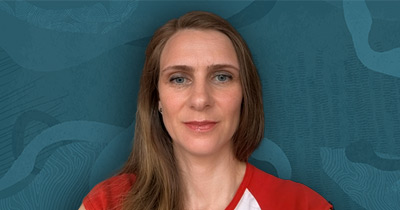
Dr. Anda Belciu
The spotlight is on Dr. Anda Belciu, Bucharest Academy of Economic Studies, Romania
The Bucharest Academy of Economic Studies (ASE) was founded in Bucharest, Romania, in 1913, by a Royal Decree signed by King Carol I, with the aim of serving as a leading center for higher education, research, and innovation in economics, business, public administration, and related social sciences, while contributing to sustainable economic and social development in Romania and the wider Central and Southeastern Europe regions.
ASE has 12 faculties and a business school, with a total student body of over 24,000 enrolled in undergraduate and graduate degree courses. The Faculty of Economic Cybernetics, Statistics and Informatics (CSIE) combines computer science with systems theory, mathematical modeling, simulation, and statistical analysis as applied to economic and organizational problems.
The CSIE faculty is composed of three departments, one for each of the disciplines: the Department of Economic Informatics and Cybernetics; the Department of Statistics and Econometrics; and the Department of Applied Mathematics.
Dr. Anda Belciu is an associate professor in the Department of Economic Informatics and Cybernetics (DICE) and delivers courses as part of the Databases and Information Systems team, which has 10 faculty members. She is coordinator of both the bachelor’s and master’s degree database courses and teaches the Advanced Database Systems and Integrating Databases with the Cloud Environment courses at master’s degree level. She uses Oracle Academy’s database curriculum across all database and database management systems courses.
Dr. Belciu holds a bachelor's degree in Economic Informatics from the Bucharest Academy of Economic Studies, where her thesis examined Java application development with Oracle databases.
Also at ASE, she earned a PhD in Economic Informatics defending the topic: Spatial databases in Service-Oriented Architecture. She has published and spoken frequently at international conferences. At DICE she coordinates bachelor's theses, master's dissertations, projects, and student competition entries.
Oracle Academy: When did you begin teaching implementing Oracle Academy resources?
Anda Belciu: It was in 2009. I completed my bachelor thesis using the Oracle database and, when offered a teaching position in ASE, I took the necessary courses enabling me to teach the Oracle Academy curriculum. ASE has been an Oracle Academy member since 1999, initially within the Oracle Academic Initiative program, and I was exposed to the courses as a student there. In 2008 I obtained an Oracle Academic Initiative Diploma. I consider Oracle to be the best technology, and especially enjoy the geospatial features of the database.
Oracle Academy: And what do your lessons cover?
Anda Belciu: I teach databases from the point of view of their role as business support systems.
At the bachelor’s degree level, I use Database Design, Database Programming with SQL and Database Programming with PL/SQL. Students learn the fundamentals of database programming and management. As a central exercise across all my courses, we follow the Oracle Academy HR Schema, which models a simple HR organization with seven core tables and it introduces beginners to ER diagram creation.
At the master’s degree level, I teach Advanced Database Systems and Integrating Databases with the Cloud Environment, building on the previous courses and introducing object-oriented, distributed, spatial, NoSQL, and other databases. It utilizes Oracle Academy’s Oracle APEX for application development, Applied Database Systems, Application Development Foundations, and the Oracle Academy AI learning resources. I have organized everything around Oracle database 26ai as the foundational platform. Students learn integration of database management systems with cloud environments, designing and implementing databases in the cloud using advanced SQL and PL/SQL and deploying them in applications developed through the APEX low-code platform.
Oracle Academy: How many students do you teach, and do other faculty also use Oracle Academy resources?
Anda Belciu: The undergraduate course has 150 students and the graduate course has 70 to 75, depending on the semester. Each cohort attends the in-class lectures but are split into smaller groups of 20 for lab work.
Regarding instructors, six of us in the database group are trained in teaching with Oracle Academy resources; most of them teach at the undergraduate level, and some teach graduate courses.
I use the Oracle Academy Cloud Program to have access to Oracle APEX and to 26ai. All of my master’s degree students have Oracle Cloud accounts furnished by Oracle Academy. Another colleague leverages Oracle Cloud for teaching Extract, Transfer, Load (ETL) processes.
Oracle Academy: Earlier you mentioned geospatial features, could you kindly elaborate?
Anda Belciu: What I love in Oracle Database 26ai are the materials for spatial databases, graph analytics, spatial analytics, vector search, and map visualization. They give me a first-rate structure for teaching the value of geospatial information in a business context.
I begin by explaining how Oracle Spatial supports spatial data types and geometries, along with the associated functions and workflows. Students learn how to create tables, add geometries such as circles and polygons, maintain spatial metadata, create spatial indexes, and visualize the results.
Together, Oracle Spatial, Oracle Graph, and Oracle AI Vector Search provide a powerful trio of Oracle Database capabilities for identifying and mapping physical locations, analyzing connections and relationships, and finding similarities among images or text descriptions.
To put this into practice, I have given students a project based on my doctoral thesis: the distribution and components of power plants across Romania. Just as I did, they use the spatial power of an Oracle database to show information through map layering, to store the locations and coordinates of the power plants, to integrate data from multiple energy-generation facilities, and to spatially analyze the energy infrastructure. Through this work, students develop a GIS-based decision support system for Romania’s electricity sector.
Students love this project because they get to play with what I myself like most: spatial, graph, and vector data. This is pleasing since we want students to be interested and involved, otherwise they won’t come to classes! I am considering creating a separate course dedicated to spatial technologies.
Oracle Academy: And you use Oracle APEX for applications development…
Anda Belciu: That’s right, in my Integrating Databases with the Cloud Environment course, the use of Oracle APEX for building apps on top of databases is mandatory. I have a few exercises, including the power plant case study mentioned, but each student also has a business project of their choice for final year exams: managing hotels, libraries, online shops, ticketing systems for concerts or for planes, and other topics.
This year, I had them use the Oracle database and APEX to design the entity relationship diagram and mobile app for a vehicle service center where the workshop has mechanics, and mechanics solve issues; there are tables for cars, customers, appointments, costs, tools, and such.
Oracle Academy: Excellent. And how do they take to Oracle APEX?
Anda Belciu: They love it. As mentioned, students choose a business-focused project for their end-term exams, and the use of APEX is a must. What I’m most enthusiastic about is that some of them go on to use APEX for their dissertations or extracurricular projects, developing it to a greater depth than what we have time for in the classroom. They really invest themselves and come up with strong applications, at times good enough for use in the real business world. I’m proud of them.
Oracle Academy: That’s positive!
Anda Belciu: Yes, and what’s more, every year Oracle Academy hosts an APEX workshop for us, with volunteer guest speakers from Oracle itself, which is highly motivating. Sometimes we are surprised to find past students involved in the workshops — graduates who now work for Oracle or for companies using Oracle technologies.
Oracle Academy: Do you direct students to the Oracle Academy Student Hub for additional resources?
Anda Belciu: Certainly. My colleagues and I encourage students to follow more courses, and we enroll them through the Member Hub for their choices: Java, machine learning, APEX, whatever. We as teachers also use the Member Hub for tracking progress and completion, running quizzes, and helping students to improve grades so that they can attain course completion certificates.
Apart from that, Oracle has a wealth of resources and I point them to, for example, Ask Tom, or Developer Coaching, with live presentations where they can ask their own questions or view the recordings. I give them all the possible links and encourage them to participate.
Oracle Academy: How would you define the overall benefits of Oracle Academy for you and the students?
Anda Belciu: Oracle Academy helps to drive student engagement through the very fact that they have access to the world’s leading database, with hands-on workshops, and consistently updated curriculum, which keeps the resources fresh and relevant.
Having Oracle technology use under their belt enhances their CVs, because anything with Oracle on it raises their profiles.
For the university, it ensures our curriculum keeps in line with Oracle’s release schedule; for example, APEX is updated annually with a totally new interface, or the recently announced Oracle Database 26ai is immediately available to us. We also appreciate that with Oracle Cloud through Oracle Academy, there are zero infrastructure costs. Oracle Cloud runs entirely in the browser, completely bypassing the hardware limitations of traditional lab computers.
Oracle Academy: Finally, what do you like to do when not teaching?
Anda Belciu: I really enjoy skiing. My husband and I have skied in many places: France, Austria, Italy, Romania, and Bulgaria, and now our kids, ages 8 and 11, are catching up and surpassing us! It’s great fun. Otherwise, our summer holidays are often spent by the sea in Greece, as we will this year.
I like reading and also like to go to pilates or yoga two or three times a week to get some healthy exercise. And many evenings are spent taking the children to their activities: chess, tennis, enhanced English classes… never a dull moment!
Thank you, Dr. Anda Belciu, for your passion for Oracle Academy and for preparing your students to make a positive impact.