Member Success Stories
Making a difference with Oracle Academy
Membership
Share this story
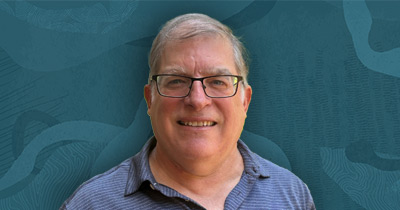
Dr. Marion McHugh
The spotlight is on Dr. Marion McHugh, Furman University, United States.
Furman University, in Greenville, South Carolina, is a liberal arts and sciences college of 2,400 students. Its location in northwestern part of South Carolina — dubbed the Heart of the Southeast — is nestled in the foothills of the Blue Ridge Mountains and positioned between Atlanta, Charlotte, and Asheville. The 940-acre campus provides access to internships, cultural experiences, and outdoor adventures.
The university has 27 academic departments, each of which is dedicated to nurturing an environment of intellectual curiosity and diversity that fosters the critical thinking, communication, and problem-solving skills students will carry with them into their post-college lives. In the Business and Accounting department, students can choose to major in accounting or one of five specialty tracks in finance, marketing, business entrepreneurship, international business, and business administration.
Associate Professor Marion McHugh teaches Accounting Information Systems as part of the accounting major, in which students examine and analyze systems that process accounting information using transaction cycles in both manual and automated environments.
He holds a PhD in accounting from the University of Arkansas, an MBA with a focus on IT systems from the University of California, Irvine, and a bachelor’s degree from California State University, San Bernardino. Prior to joining the Furman faculty in the fall of 2010, Dr. McHugh held a visiting appointment in the Department of Accountancy at the University of Illinois at Urbana-Champaign. He has also been a member of the Accounting Department at Virginia Commonwealth University. In addition to academic posts, Dr. McHugh has held positions at technology companies.
Oracle Academy: Kindly share with us why and how you use Oracle Academy resources in Accounting Information Systems.
Marion McHugh: I selected Oracle Academy because I was dissatisfied with the traditional tools used in accounting courses. For one thing, I wanted a product that would ensure lab collaboration. Plus, the tools I was using led to troublesome Mac vs. PC problems. But my main reason for selecting Oracle Academy was to show students what goes on under the hood of an accounting or ERP system. By using Oracle SQL Data Modeler and Oracle APEX, they learn not just debits and credits, but how those numbers are generated. That’s the central idea.
So, in 2019 I made sure we were signed up to Oracle Academy as an institutional member, and I’ve been maintaining the relationship ever since.
Oracle Academy: Are you an accountant?
Marion McHugh: You could call me a hybrid accounting-systems guy! My first job out of college was with a multinational technology company in the early 90s, before internet browsers really took off, working in their 800-call center, solving issues, interacting with salespeople, making sure everyone was on the same page. That was a technology immersion which led me to earn an MBA with a focus on IT systems. IT systems have always played a role in accounting and auditing, and I was hired by one of the Big Four accountancy firms. Since I’ve always had an interest in academia, after a couple of years I moved to Arkansas to do a PhD with focus in accounting, and from there moved into teaching. Others here at Furman teach the distinct elements of the financial accounting sequence — managerial, cost, financial and so on — whilst I am the central person behind relational database management systems and apps development, all rolled up into the Accounting Information Systems course.
Oracle Academy: That explains why you want undergraduate accountants to understand what goes on under the hood.
Marion McHugh: Exactly. Oracle Academy makes Oracle NetSuite available free of charge, and it provides valuable skills for students to have. But I have an additional goal of getting them to understand how systems such as NetSuite are organized, how they process data, and how the accounting logic is hidden inside the software.
By learning how to query and manage data with Oracle SQL Data Modeler and to build applications using Oracle APEX, they not only learn what goes on under the ERP hood, but also are equipped to be a power user in terms of supporting an implementation or even in a consulting scenario where they can support customizations and build out other types of systems that accountants need.
Oracle Academy: That sounds powerful. How many are in your class?
Marion McHugh: Furman is a liberal arts and sciences college that caps class sizes at 20 or so. That works well for me, where I have 15-20 in the lab working on in-depth projects. Smaller class sizes allow for more teacher-student interaction, going deeper into the ideas. All students are residential, so there are no virtual classes with remote participants. It’s an intense but fruitful 15-week program.
Oracle Academy: Could you please walk us through the program…
Marion McHugh: I begin with non-accounting business processing. This introduces students to data modeling using everyday life scenarios they can relate to, such as planning a vacation or doing taxes, rather than jumping in with complex accounting data. They begin with Oracle SQL Data Modeler by building a Database Definition Language (DDL) script for the scenario and then learn how to load that into Oracle APEX to construct an application and web page.
After a week or so, we develop more activity models, this time introducing accounting cycles such as sales and collections or purchases and disbursements. Next, they begin to learn how to write SQL queries to obtain data such as accounts receivable, accounts payable, gross profit, sales, top employees, top vendors, and other essential accounting data. By now they can build out a simple income statement that gets them to gross profit and get the feel of how NetSuite automates those processes and arrives at more complicated financials statements.
Once students have a solid understanding of SQL Data Modeler and APEX, I introduce Oracle Academy’s APEX AI Assistant, which can assist with building out queries and processing data.
Oracle Academy: Earlier you mentioned in-depth projects; can you give an example?
Marion McHugh: The major project comes at the end of the course. They already have looked at NetSuite, have built up their SQL skills, and have a general understanding of how purchases and disbursements or sales and collections work. At this point I instruct them to use all those skills to build a real-world prototype.
The project requires students to examine the revenue process of a fictitious retailer, and to complete a build out of its sales and cash receipts cycle. They are tasked in groups to use their SQL and APEX expertise to create a system for handling customer orders, inventory, shipping, and payments. They must produce a physical model (DDL script), build all the pieces for a relational model, upload the scripts to APEX, and build a home page with working links, an inventory maintenance page, an order entry page, and reports. The dashboard reports include key data such as customer locations grouped by cities, sales by cities, sales by month, cost of goods sold, inventory levels, accounts receivable by customer, and even an income statement.
The project enhances their understanding of business events, business processes, and internal controls for the sales and cash receipts cycle along with the way information is queried to make it work. When they build the sales and cash receipts cycle, they have to think through questions like: what entities exist, what are the relationships and the business rules, which events create accounting entries, what reports does management need — everything required of an accounting information system.
Oracle Academy: An apprenticeship in the engine room…
Marion McHugh: That pretty much hits the nail on the head. In summary, my class concentrates on having students understand why accounting systems work, and how they are designed rather than just what comes out of the box. For the final part of the course, students move to processing transactions in NetSuite, now knowing — as we have said — what goes on under the hood.
Incidentally, there is a parallel here to what I term true state knowledge. By that I mean the necessity of accountants knowing what’s going on in the organization they work for. It’s not enough just to take reports, numbers, and come up with financial statements; you need to know the underlying reality of the business world, what the transactions are. If you are in the business of reflecting reality through financial statements, you have a good understanding of the actual reality. Accounting is the process of taking the mass of activity at work in an organization and capturing it, categorizing it, compressing it, organizing it, such that you build information (or financial statements) that properly reflects what’s actually happening.
Oracle Academy: It’s crucial to get the accounts right! How would you summarize the benefits of using Oracle Academy resources?
Marion McHugh: At the end of the day, students should be very comfortable with NetSuite or any accounting or ERP system. But on top of that, using this method of breaking down the processes with SQL Data Modeler and Oracle APEX, my students graduate with a thorough knowledge of how accounting information systems are constructed and function. They know that the presentation of debits and credits in two columns is actually the result of SQL querying data stored in relational tables.
I recently presented this concept at the American Accounting Association’s Global Connect conference in Las Vegas, a few days of workshops and sessions related to data analytics and technologies in accounting where professors shared their teaching methods with other educators. I shared my experiences of using Oracle Academy’s resources as an alternative to other legacy ways of teaching accounting systems.
Oracle Academy: That’s great! Lastly, what are your interests outside of the classroom?
Marion McHugh: Right now, there’s a lot of family focused activity. During this summer break, my wife and I are busy ferrying our elder daughter to interviews at different colleges. At the same time, we support our son who plays American football and a younger daughter soon in sixth grade who plays volleyball.
Otherwise, we love the Greenville area, which is in the northern part of South Carolina. There are trout streams in the Blue Mountains, and I often will be out there with my rod at weekends. Also, we all enjoy hiking in nearby Jones Gap State Park. The ‘gap’ refers to the zone between the Table Rock and Poinsett watersheds, where the Continental Divide sends rainwater to the Gulf of Mexico on one side and to the Atlantic on the other. When you stand on top, the views either way are fantastic.
We live in a wooded area, and I do a fair bit of yardwork. But one has to keep an eye open for bears, especially in the summer when things get dry, and bears come looking for berries, at times loping right through our backyard!
Thank you, Dr. Marion McHugh, for your passion for Oracle Academy and for preparing your students to make a positive impact.