Member Success Stories
Making a difference with Oracle Academy
Membership
Share this story
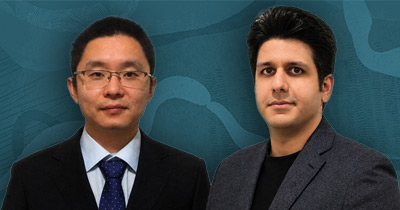
Mr. Jay Zhao and Dr. Mohammad Goudarzi
The spotlight is on Dr. Mohammad Goudarzi and Mr. Jay Zhao, Monash University, Australia.
Monash University in Melbourne, Australia, has 86,000 students and 17,000 staff located on six campuses and three international teaching locations. In 2032, it will inaugurate a new state-of-the-art campus in Kuala Lumpur. Monash, with more than 150 active fields of research, has invested in the new MAVERIC advanced AI supercomputer that will secure Australia’s sovereign capability to supercharge research.
The university has 10 areas of study, of which the Faculty of Information Technology, located in the main campus at Clayton, offers a dozen undergraduate and postgraduate degrees in computer science, IT, data science and cybersecurity.
The Cloud Computing and Security unit is a postgraduate unit delivered by the Department of Software Systems & Cybersecurity (SSC). It is currently the only unit at Monash that is dedicated to teaching cloud computing for postgraduate students.
Dr. Mohammad Goudarzi and Mr. Jay Zhao together manage the unit, of which Dr. Goudarzi was among its early designers. As a unit chief examiner, he oversees the design, quality assurance, academic integrity, and the overall delivery, and is also the main lecturer. Jay Zhao is the Unit Coordinator and the Head Tutor, who coordinates the assessment, learning management system, and student-related administrative tasks.
Dr. Goudarzi is a lecturer and Assistant Professor in the SSC, part of the Faculty of Information Technology. Before joining Monash, he worked as a senior research fellow in UNSW Sydney with Cisco. He earned his PhD in Computer Science with a Specialization in Distributed Systems and Algorithms & Operating Systems at the University of Melbourne, Australia. He is currently researching two main areas: efficient machine learning across cloud and edge computing environments, and distributed systems for machine learning, with energy efficiency, scalability, and model performance as key evaluation metrics. In 2022, he won the Oracle Cloud Infrastructure (OCI) Solution Architect of the Year Award as a part of Oracle’s Global Excellence Awards.
Jay Zhao is currently earning his PhD in Computer Science at the University of Melbourne in parallel to his teaching roles at Monash, focusing on machine learning and deep reinforcement learning-based cloud resource optimization. He holds a master’s degree in Information Technology from the University of Melbourne. Prior to academic work, he spent 12 years as an IT professional, including the role of Chief Technology Officer for an Australian IT retail company. He is expert in programming languages, databases, and cloud platforms, and has worked with Oracle technology throughout his professional career.
Oracle Academy: Can you tell us about your use of OCI?
Mohammad Goudarzi: In Semester 1, 2026, we fully integrated Oracle Cloud Infrastructure directly into our Cloud Computing and Security curriculum as a vital piece of a broader multi-cloud architecture approach. We have a large cohort of 600 students using the platform as a core component of their practical learning and also for the main assignments, which are designed based on real-world application scenarios.
Specifically, we show how OCI enables them to manage and deploy resources across different compartments, and how to quickly deploy a full Virtual Cloud Network in OCI using the Oracle Wizard. We teach them how to use Oracle VCN to bring up a public subnet, a private subnet, security groups, ACLs (Access Control Lists), and other security measures. Our course is an elective unit for several postgraduate majors, and our approach is to have students design, deploy, and evaluate distributed applications and practice container orchestration across diverse cloud environments.
Oracle Academy: And what is the main assignment you mentioned?
Mohammad Goudarzi: The classroom assignment is to build a system for automated wildlife tagging and query processing. It is a multi-cloud project in which students work in teams to deploy pretrained machine learning models to identify animal images, choose storage and perform queries. The project is called Aussie EcoLens: A Multi-Cloud Serverless Wildlife Observation Platform and is supported by the Environmental Informatics Hub, of which I am a member. The Hub develops digital solutions to help address the biodiversity extinction crisis and support the recovery of nature.
Jay Zhao: It is a cloud source project to store images of rare native Australian species for sharing with researchers, data scientists and anyone wishing to identify the rich wildlife in this country — quolls, bandicoots, mallee fowl, and many more animals in the wilderness. It is an image sharing repository where people can use mobile phones to take a snapshot of rare or endangered species and upload them to a multi-cloud platform to detect what kind of animal, bird, reptile, or other they have in a picture.
Oracle Academy: And Oracle Cloud Infrastructure is used in this project…
Mohammad Goudarzi: Exactly. It’s the main assignment. All 600 students work on that using different services across multiple cloud vendors. The focus of this project is to design a serverless application across at least two major cloud providers that enables clients to upload their images and videos to public cloud storage. To implement such an application, students need to showcase their understanding of scalability, security, cost optimization and interoperability of multiple cloud environments.
We encourage them to use OCI for a number of reasons, one being that the assignment is fully covered by the Oracle Cloud Free Tier and additional resources available through the $300USD credits provided by Oracle Academy for one year. Students can choose among AWS, GCP, or Azure for their secondary cloud, but those platforms do not offer the same benefits. The cost of the OCI resources we are using is much cheaper and means that students can play with many more of the almost 100 services available in Oracle Cloud. Oracle, for example, provides Image Analysis with up to 5,000 images a month free of charge and also offers 10TB of egress traffic before billing.
Jay Zhao: What’s more, the Oracle Linux images — prebuilt virtual machine templates — are industry grade, with hardened security, which gives students first-hand experience of image processing before they move to industry and deal with even stricter security. Of course, they are learning at least one other cloud during the semester, and that’s our strategy: any company that cares about its customers wants to provide high availability of their services, so using multi-cloud has become the norm.
Oracle Academy: A fascinating project. Do you repeat each year?
Mohammad Goudarzi: Actually, we vary; last year it was BirdTag, in which we tag bird species by image, video, and audio files. This year it’s rare Australian animal images and videos. Next year it might not be eco-related but something else yet practical and a real-world application scenario. But this semester’s project has been a success. Students feel good about it, the project makes sense to them, and they can feel the impact on a growing community of wildlife observers and preservationists, in Australia and across the world.
Oracle Academy: How do you handle teaching 600 students?
Mohammad Goudarzi: We have a hybrid model. Normally, I do lectures on campus in the auditorium and Jay manages the online students who see the lecture live onscreen and answers their queries on the chat. It’s a two-hour lecture attended by 300-400, both live and online. The rest of students follow the unit by checking the recorded lectures.
We also have two hours of applied sessions, with a maximum of 60 students per session, and we have three tutors for that, so the norm becomes one tutor per 20 students. One tutor delivers the main content, and two support tutors go around, helping students one on one, answering questions, etc. In all we have 11 tutors. Some are a super expert: experienced people with industry backgrounds or who currently are working in industry. In addition, we have five or six tutors who were top performing students from the previous year, and who we have recruited as tutors and trained for our Cloud Computing and Security course.
Oracle Academy: Do you have contact with Oracle itself?
Mohammad Goudarzi: Because of our connection with Oracle Academy, we get industry guest lectures from Oracle Academy Ambassadors. This semester a senior Oracle Solution Architect visited and presented some real-world scenarios, emphasizing how they manage security, machine learning pipelines, and so forth, alongside highlighting how the technology students are learning is used in a big tech company. As a new initiative this semester, we have started organizing industry mock interviews for students in the unit. As part of this initiative, we plan to invite industry experts to participate as interviewers and provide students with practical feedback, helping them better understand professional expectations and prepare for future career opportunities. Oracle visitors also help us to stage these mock interviews that help students understand the process of applying to a big tech company like Oracle.
Another aid is that the solution architects come up with realistic scenarios for which students must design the architecture and then present their solution to the experts. Invaluable!
Oracle Academy: Regarding the Oracle Academy lesson plans, do you follow them or adapt within your multi-cloud strategy?
Mohammad Goudarzi: We cherry pick and adapt rather than directly use the Oracle Academy content. We went through all of the resources to decide what to select.
Jay Zhao: We also point all students to the rich Getting Started with Oracle Cloud Infrastructure tutorials and similar tutorials for other aspects of Oracle, all available on the Student Hub for students to access by themselves. They might specialize in machine learning or computer vision, and so we encourage them to discover all of the tools and resources available through Oracle Academy. Meanwhile, our lectures have to focus on basic concepts.
Oracle Academy: Do you encourage certification?
Jay Zhao: We are convinced that what they learn in our course will prepare them for OCI certification paths. Last year Oracle had a three-month free OCI certification exam offer. We sent a message to the cohort saying whatever you learn in our sessions is enough to pass that certification exam.
Oracle Academy: What plans do you have to expand cloud teaching at Monash?
Mohammad Goudarzi: We have quite a lot in the pipeline. As the only dedicated unit in Monash for cloud computing, across all faculties, we get students enrolled from many different disciplines other than IT and computer science: business, accounting, management, and medicine. Due to this demand for cloud knowledge, the faculty leadership has asked me to design a new undergraduate unit for Cloud Computing, which we will roll out next semester. In the new unit, we cover fundamental cloud computing concepts, and interdisciplinary topics such as AI and cloud security, as well as emerging research trends. To that end, Oracle Academy has agreed to assign us 1,200 seats for Oracle Cloud to cover the additional intake of 300 that have enrolled for the new courses, plus a further 100 seats for online students based overseas. We are grateful to Oracle Academy for its continuous support.
Oracle Academy: Good news. Maybe you could each summarize the principal benefits of Oracle Academy membership.
Mohammad Goudarzi: For educators, having access to OCI and its multitude of services expands our lecture capacity and capability. Had we not those resources, we could not run our assignments or truly instigate our multi-cloud strategy. And for students, having access to such resources boosts their motivation, spurs them on to go deeper into cloud and cloud security. Over 90% of them say that they love the unit — and that’s really important for me, knowing that students feel they can learn industry-ready skills and move ahead.
Jay Zhao: To us, as educators, the primary benefit of Oracle Academy is providing students with barrier-free, hands-on access to enterprise-grade cloud infrastructure. From the Oracle ecosystem viewpoint, there will be more users in the future. They graduate and become software developers, engineers, and other roles, and that’s a plus for the ranking of our institution, for industry — and for Oracle.
Oracle Academy: Thank you. And finally, what are your interests outside of teaching?
Mohammad Goudarzi: Teaching and research are certainly putting on pressure, but normally I like to play badminton and table tennis. My other passion is listening to and playing guitar, and more specifically rock music.
Jay Zhao: I have two school age children who are involved in ballet, violin and clarinet, and so I accompany them frequently to after-school activities.
As a personal antidote to the stress of academia, I enjoy gardening: growing vegetables and flowers. At the same time, I enjoy crafting. Before joining Monash, I taught myself woodworking, and now I make my own furniture. I have also learned how to weld, to tune cars, and a few other competencies that fulfill me.
Thank you, Dr. Mohammad Goudarzi and Mr. Jay Zhao, for your passion for Oracle Academy and for preparing your students to make a positive impact.