Member Success Stories
Making a difference with Oracle Academy
Membership
Share this story
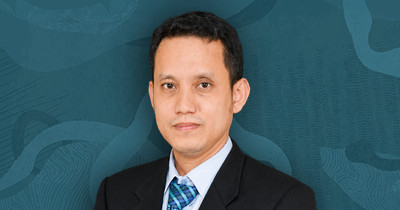
Ts. Dr. Abdullah Fairuzullah bin Ahmad Tajuddin
The spotlight is on Ts. Dr. Abdullah Fairuzullah bin Ahmad Tajuddin, Universiti Malaysia Pahang Al-Sultan Abdullah, Malaysia.
Universiti Malaysia Pahang Al-Sultan Abdullah (UMPSA), in Pekan, Pahang, Malaysia, is home to a Faculty of Computing with 1,900 active students across undergraduate and postgraduate study. Its programs span software engineering, computer systems and networking, multimedia software, cyber security, artificial intelligence, digital transformation, and related areas.
Ts. Dr. Abdullah Fairuzullah bin Ahmad Tajuddin joined UMPSA’s Faculty of Computing as a Senior Lecturer and Researcher in January 2025. Before his current academic appointment, he spent more than 20 years at UMPSA as an IT Manager, taking on leadership roles including Deputy Director of the Digital Technology Centre and the Data Management and Analytics Centre. He teaches Cloud Computing Technology, Network Programming, Operating Systems, and Data & Network Security.
He holds a bachelor’s degree in Information Technology from Universiti Utara Malaysia, a master’s degree in Computer Science in Networking from Universiti Teknologi MARA Shah Alam, and a PhD in Computer Science in Database from UMPSA. A registered Professional Technologist (Ts) with the Malaysia Board of Technologists, he brings extensive expertise in database technology and information systems, supported by Oracle professional certifications including Oracle Certified AI Database Administration Professional, Oracle Cloud Infrastructure Architect Associate, Oracle Certified Database Professional, Oracle Database Administrator, Oracle Solaris Administrator, Oracle MySQL Administrator, Oracle Database Appliance Administrator, and Oracle SQL Expert.
Through Oracle Academy, Ts. Dr. Abdullah gives students practical experience with Oracle Cloud Infrastructure (OCI), Oracle APEX, and Oracle Autonomous Database. In June 2026, 24 of 27 students who took part in his OCI courses earned Oracle professional certification, reflecting the emphasis he places on combining structured learning with practical cloud work.
Oracle Academy: How did your journey with Oracle begin, and how has it shaped your teaching?
Abdullah Tajuddin: My hands-on experience with Oracle began around 2006 when I was working as a database administrator. I completed Oracle University training across several generations of Oracle Database, as well as Oracle Database Appliance (ODA), Oracle Linux, Oracle Forms/Report and Oracle Cloud Infrastructure, and over time earned credentials including Oracle Certified Professional, Oracle Database 11g Administrator, and Oracle SQL Expert.
That experience shaped the way I teach. When I moved into academia in 2025, I wanted students to encounter more than textbook scenarios. I wanted them to work through the kinds of challenges they may face in industry. Oracle Academy was a natural fit because I had already seen how structured Oracle training could connect technical knowledge with workplace readiness.
Oracle Academy: How are you using Oracle Academy resources and Oracle technologies with your students?
Abdullah Tajuddin: In my Cloud Computing Technology course, we use the OCI Foundations I and OCI Foundations II curricula to establish the core concepts, then move into practical work through Oracle Cloud Infrastructure Labs. Students provision Compute instances, work with Storage and AI services, and configure networking and security in a live cloud environment.
We also use Oracle APEX on Oracle Autonomous Database as our main low-code development platform. Students use it for semester group projects, and my final year project supervisees are required to use it as the foundation for their final systems. This combination helps students develop cloud, database, application development, and troubleshooting skills together rather than as separate topics.
The progression from curriculum to labs and then to projects is important. Students first build a foundation in cloud concepts, then apply those ideas while they provision resources, configure networks, and develop applications. By the time they reach a group or final-year project, they can make informed technical decisions rather than treating the cloud platform as a black box.
Oracle Academy: Why is hands-on cloud experience so important?
Abdullah Tajuddin: Working in a live environment turns students from passive observers into practitioners. They encounter misconfigurations, examine logs, troubleshoot network issues, and see how concepts such as Virtual Cloud Networks, security rules, and deployment work in practice. It also builds confidence because students manage the lifecycle of a real system rather than simply running code locally.
This practical work also helps students understand that cloud architecture, security, and application development are connected. They see the consequences of configuration choices and learn that a successful application depends on both the software they build and the environment in which it runs.
Oracle Academy: Can you share an example of a student project?
Abdullah Tajuddin: One example is Edu SERIA, a learning management system designed for primary schools. The students wanted to create a simpler, more visual platform for coursework, grading, progress tracking, and parent-teacher communication.
They used Oracle APEX to build role-based dashboards for students, teachers, and parents, Oracle Autonomous Database for the relational data, and OCI Object Storage for multimedia lesson files and homework uploads. They also configured Virtual Cloud Networks and security controls, which gave them practical experience in both application design and protecting sensitive information.
Projects like this require students to move from an idea and data model through development and cloud deployment. They learn to translate requirements into a working application while also taking responsibility for the underlying cloud environment. It is the type of end-to-end experience that makes the relationship between database design, low-code development, cloud services, and security tangible.
Oracle Academy: In June 2026, 24 of 27 students who took part in your OCI courses earned Oracle professional certification. What contributed to their success?
Abdullah Tajuddin: We combined targeted exam preparation with intensive practical work in Oracle Cloud Labs. Students worked through exam-related questions, completed mock exams through Oracle University, and applied the concepts directly by provisioning resources, configuring networks, and troubleshooting in a live environment. I believe that combination of theory, practice, and exam preparation was important to the result.
The outcome showed that students were not simply memorizing theory. They were applying the concepts in a cloud environment and gaining the confidence to use the services independently. That practical familiarity supported their preparation for certification and gave them a stronger base for project work.
Oracle Academy: And how are these skills helping students prepare for their careers?
Abdullah Tajuddin: I see students using their OCI and APEX experience in final year projects and final assessments, including learning management systems and secure fintech prototypes. When they move into internships, they already have experience working with live cloud environments, provisioning resources, and writing SQL for enterprise databases. That practical experience helps them understand what working with these technologies is really like.
The experience also gives students a clearer sense of the roles they may encounter after graduation. They can discuss cloud resources, databases, application requirements, and security controls from the perspective of people who have used them, not just studied them.
Oracle Academy: How does Malaysia’s growing cloud and AI landscape influence your teaching?
Abdullah Tajuddin: The growth of cloud and AI infrastructure in Malaysia makes these skills increasingly relevant for our students. Oracle’s announced investment in a public cloud region and AI infrastructure in Malaysia reinforces the importance of helping graduates understand the cloud technologies being adopted by organizations in the country. My aim is for students to be ready to contribute to that digital economy with practical, current skills.
Oracle Academy: What impact has Oracle Academy had on your teaching, and what would you like to do next?
Abdullah Tajuddin: Oracle Academy has helped me connect academic theory with enterprise technology. For students, one of the biggest changes I see is confidence. They can move from finding cloud architecture intimidating to provisioning resources and building live applications themselves.
Looking ahead, I want to deepen our use of OCI by bringing more advanced AI services and IoT capabilities into Oracle APEX projects. My current research includes generative AI with Oracle Database 26ai and smart farming, including IoT-monitored sweet potato fertigation. I would like students to build cloud-native applications that process real-time sensor data and extend their skills into more complex, data-driven solutions.
Thank you, Ts. Dr. Abdullah Fairuzullah bin Ahmad Tajuddin, for your passion for Oracle Academy and for preparing your students to make a positive impact.